
Injection Molding DFM & Mold Design Services
At Zemyn, injection molding DFM helps identify part design and tooling risks before mold manufacturing begins. At Zemyn Mold, our engineers review your 3D data, material requirements, appearance standards and production needs before developing the mold design. As a result, potential molding issues can be discussed and corrected before steel is cut.
- Plastic part manufacturability review
- Wall thickness, draft and undercut analysis
- Gate, parting line and ejection review
- Injection mold design before tooling

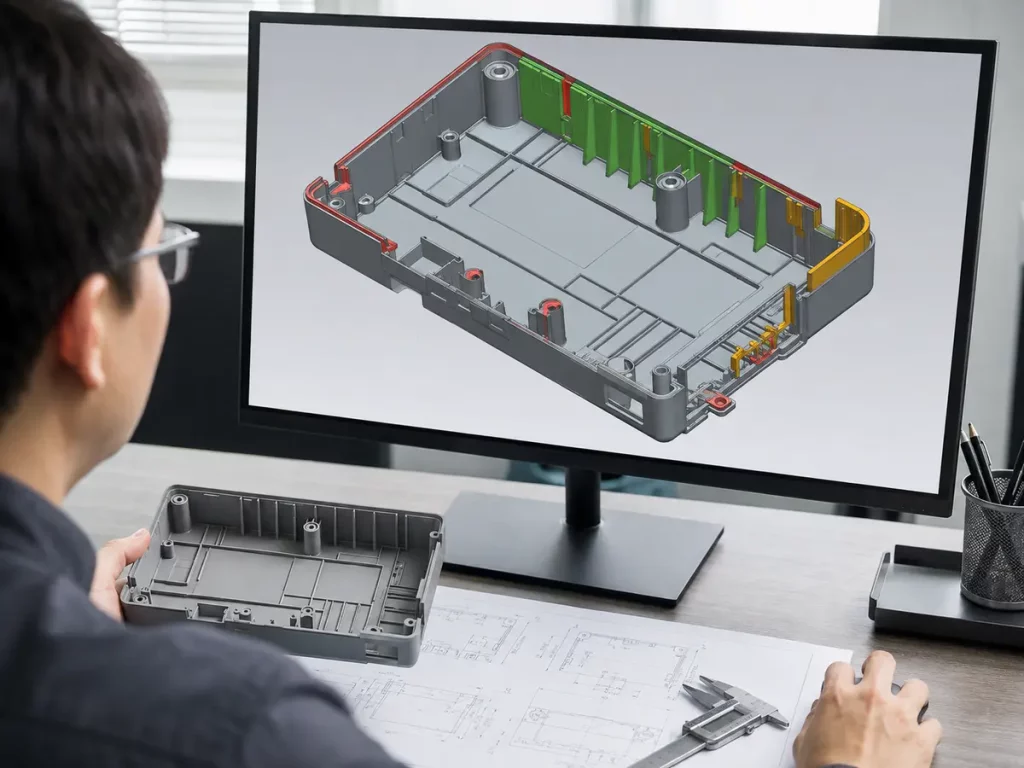
Injection Molding DFM Before Tooling Begins
A successful mold project starts with a plastic part that can be manufactured consistently. Therefore, our engineers begin with the part design and its actual production requirements.
Firstly, we review the 3D model, selected material, expected production quantity and critical product requirements. Next, our team evaluates features that may affect filling, cooling, ejection, appearance or dimensional stability.
If we find a potential issue, our engineers discuss practical changes with the customer before mold design begins. For example, we may recommend adjusting wall thickness, adding draft, changing a rib or boss, or reviewing the expected parting line.
Once we resolve the main risks, the approved part data moves into injection mold design. As a result, both sides have a clearer technical basis before tooling begins.
What We Review During DFM
- Wall thickness and thickness transitions
- Draft angles and release direction
- Ribs, bosses and structural features
- Undercuts and side-action requirements
- Parting line and shut-off conditions
- Gate location and filling considerations
- Ejection areas and ejector marks
- Material shrinkage and dimensional requirements
- Surface finish and appearance areas
- Assembly and functional requirements
Plastic Part Design Risks We Review
Large thickness changes can increase the risk of sink marks, shrinkage and uneven cooling. Therefore, we review wall transitions before tooling.
Vertical surfaces may require suitable draft for reliable release. When necessary, we suggest practical draft changes based on texture and part geometry.
Ribs and screw bosses affect strength, molding and appearance. For this reason, their thickness, height and connection to surrounding walls are reviewed carefully.
Undercuts can require sliders, lifters or other mold actions. Before mold design, we identify these areas and consider whether the structure can be simplified.
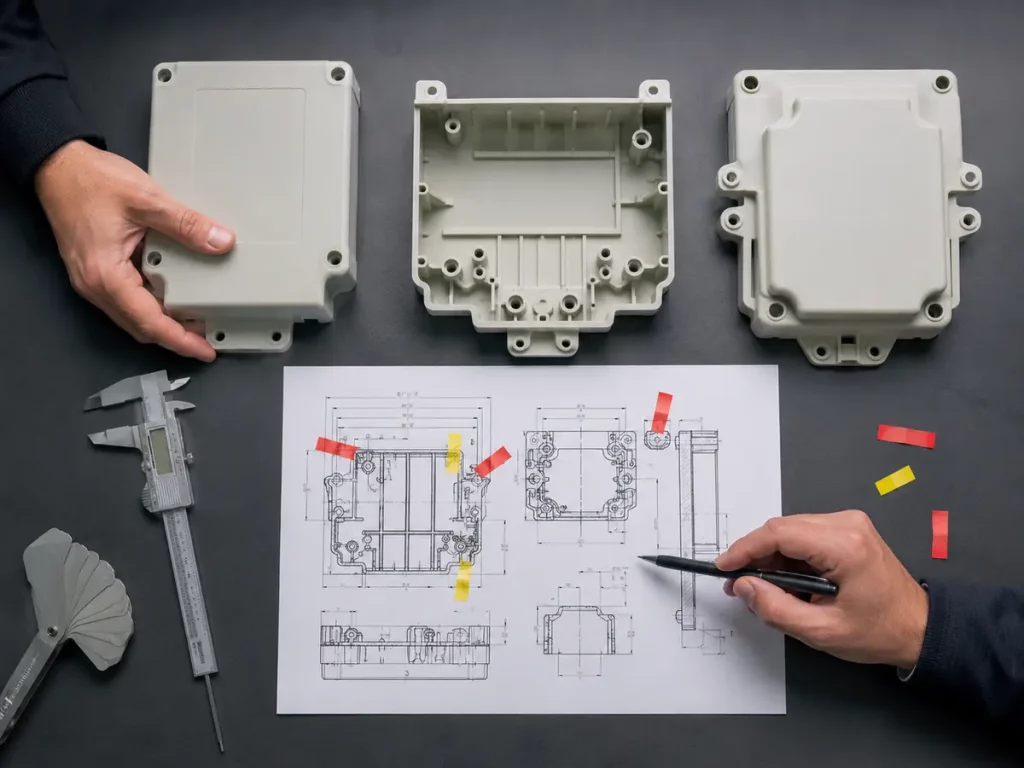
Parting lines and gate positions may affect appearance and function. Therefore, important cosmetic and assembly surfaces are considered during the review.
Thin walls or complex geometry can create ejection risks. As a result, we review possible ejector locations together with part strength and deformation concerns.
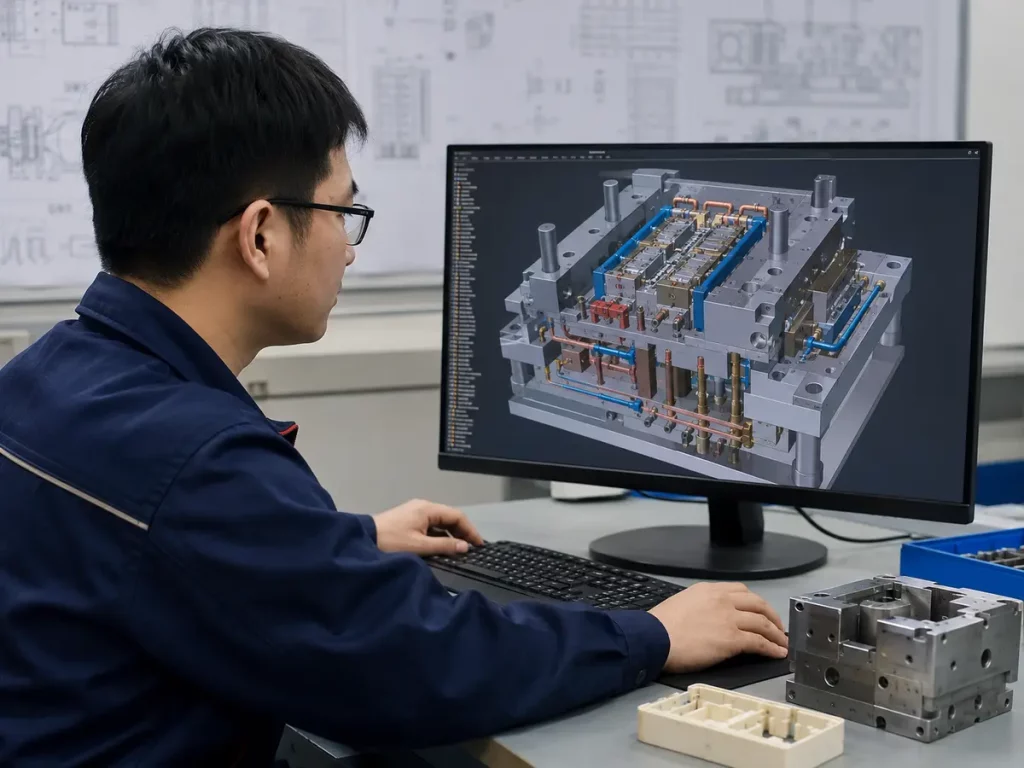
From Injection Molding DFM to Mold Design
After the customer approves the main DFM recommendations, our engineers begin the detailed mold design.
At this stage, we combine the approved product geometry with the molding requirements. In addition, our engineers consider production quantity, resin behavior, machine specifications and customer standards when developing the tooling concept.
Next, we define the cavity arrangement, parting structure, runner system, cooling layout, ejection system and required side actions. Meanwhile, the team continues to check important dimensions and appearance requirements against the approved product data.
Before manufacturing begins, we submit the relevant mold design information for customer review and confirmation. Once the customer approves the design, the project can move into mold manufacturing.
Injection Mold Design Services After DFM Approval
Cavity arrangement, mold opening direction, inserts, sliders, lifters and other required tooling structures.
Hot runner or cold runner concepts, gate type and gate location based on product and production requirements.
For stable molding, our engineers plan cooling channels around part geometry, heat concentration and expected molding conditions.
We select ejector pins, sleeves and other ejection methods according to part strength, geometry and surface requirements.
At the same time, parting surfaces and shut-off areas are reviewed for reliable mold operation and acceptable part appearance.
When the product contains undercuts or complex geometry, we evaluate sliders, lifters, inserts and other required mechanisms.
During cavity development, our engineers consider material behavior, expected shrinkage and dimensional requirements.
Our engineers consider material behavior, expected shrinkage and dimensional requirements.
Design Review and Approval Workflow
Firstly, we review the 3D model, drawings, resin, quantity, appearance requirements and critical dimensions.
Next, our engineers identify potential molding and tooling risks. If changes are recommended, we discuss them with the customer before continuing.
After the part design is confirmed, we prepare the tooling concept and detailed mold design. Then, key mold information is submitted for review.
Finally, the approved design becomes the engineering reference for mold manufacturing. Project files remain controlled throughout the next production stage.
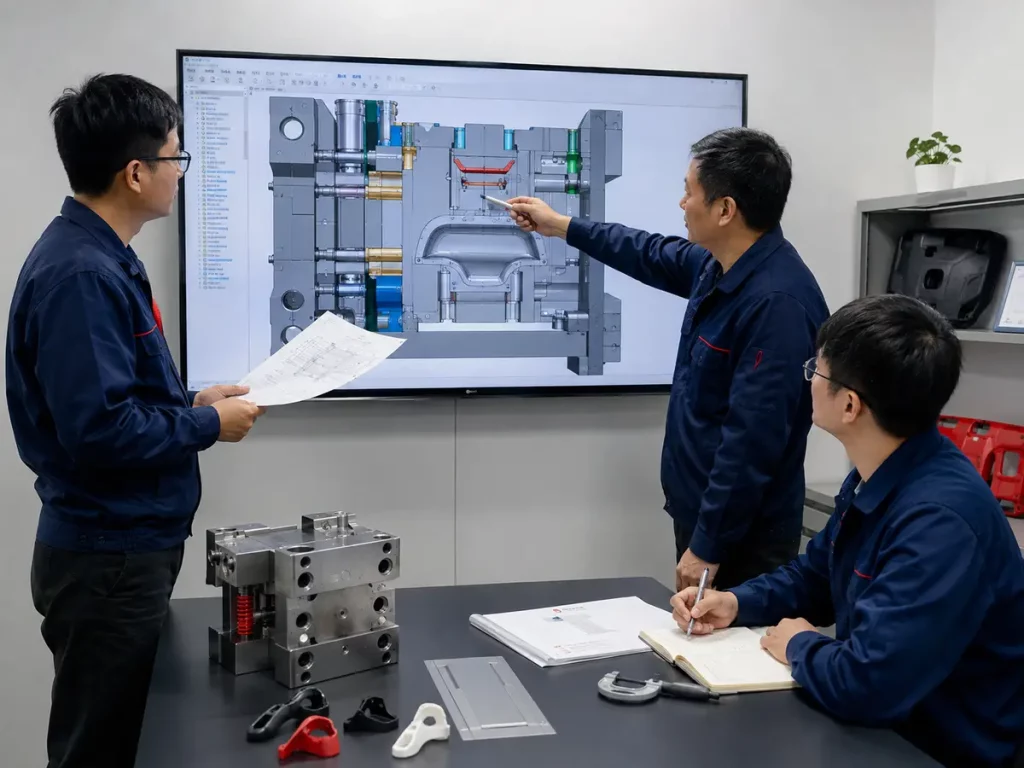
Files You Receive Before Mold Manufacturing
- DFM review report
- Product design recommendations
- Mold structure proposal
- Parting line information
- Gate location proposal
- Ejection concept
- 2D mold drawings
- 3D mold design files
- Mold component drawings
- Material and component information
- Mold flow analysis when required
- Customer-specified project documents
The exact document package depends on the project and customer requirements. However, our goal is to keep the important engineering decisions clear before tooling starts.
Therefore, the customer can review the mold concept before the project moves into manufacturing. After design approval, the project proceeds to our plastic injection mold making process.
In addition, our engineering and project-control workflow operates under an ISO 9001 quality management system.
Injection Molding DFM FAQs
What files do you need for an injection molding DFM review?
A 3D CAD file is the best starting point. In addition, 2D drawings, material information, expected quantity, appearance requirements and critical dimensions help us provide a more complete review.
Can you review my plastic part before I order a mold?
Sure. DFM review is most useful before tooling begins because design changes are usually easier to evaluate at this stage.
What problems can DFM identify?
DFM can identify potential concerns related to wall thickness, draft, ribs, bosses, undercuts, parting lines, gates, ejection, shrinkage and other molding conditions.
Can you modify my product design?
We can provide engineering recommendations based on manufacturability. However, product changes are reviewed with the customer before the approved data is used for mold design.
Do you provide injection mold design services?
Following DFM approval, our engineering team develops the injection mold design according to the confirmed part data, production requirements and customer tooling standards.
What happens after the mold design is approved?
Once the design is approved, the project can move into mold manufacturing. Afterward, tooling, trial molding, sample approval and production can continue according to the project plan.
Start Your Project with an Engineering Review
Send us your 3D CAD files, drawings, resin requirements and expected production quantity. From there, our engineering team will review the project and discuss the key manufacturability and tooling requirements with you before mold manufacturing begins.
NDA support is available for confidential product development projects.